
Premium Transaction Outcomes Don’t Happen By Accident
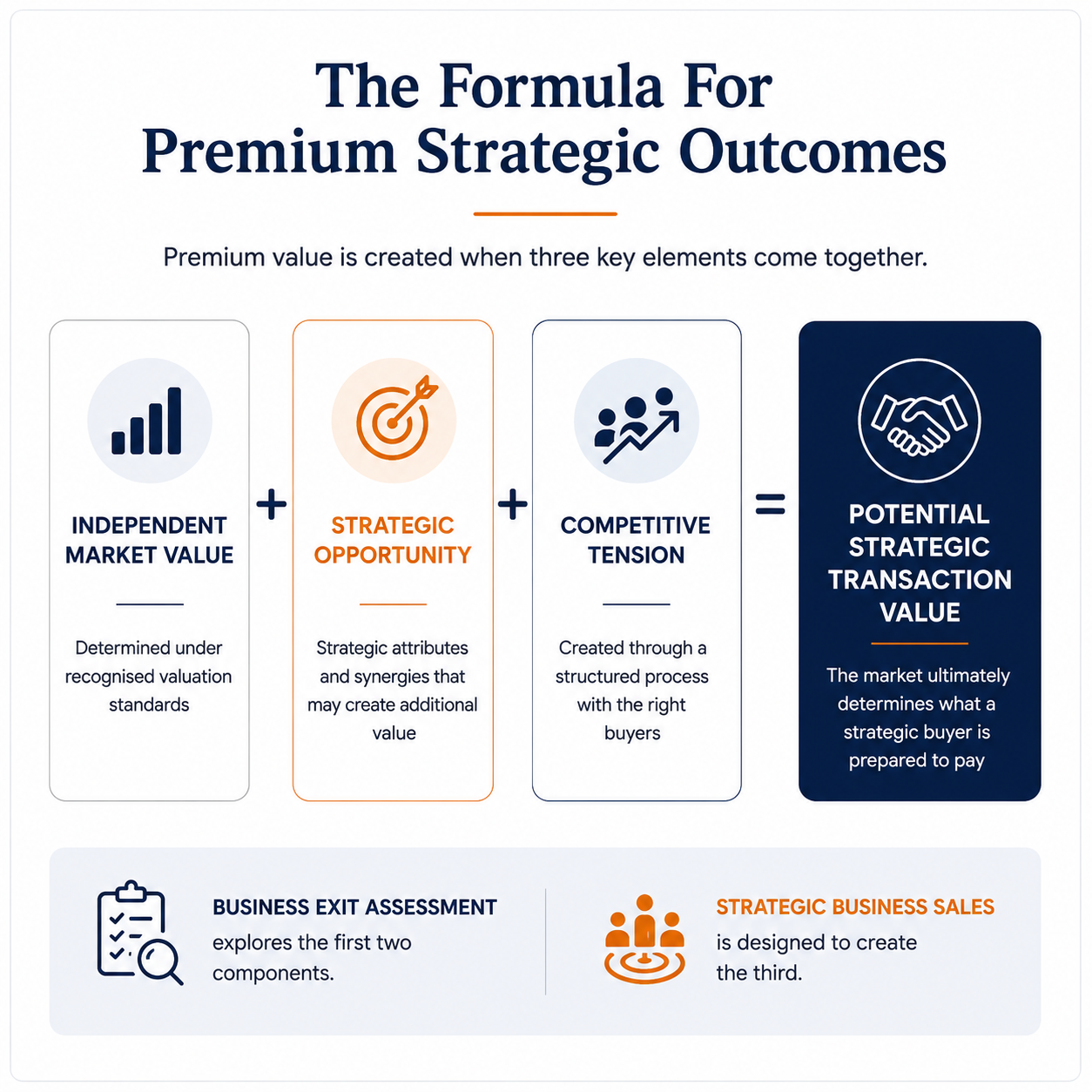
Independent business valuations establish Market Value in accordance with professional valuation standards. They do not attempt to assess the additional value individual strategic buyers may attribute to acquisition synergies or competitive advantages.
For many clients, premium transaction outcomes typically occur when Market Value, Strategic Opportunity and Competitive Tension come together.
A Business Exit Assessment explores these opportunities before your business goes to market, providing a roadmap to strengthen strategic positioning, reduce buyer risk and maximise potential transaction outcomes.
Introducing The BSP Strategic Value Framework
Independent Market Value provides an important benchmark to make your most important decisions. But transaction outcomes are influenced by many commercial factors beyond an independent valuation. The BSP Strategic Value Framework illustrates the key drivers assessed during a Business Exit Assessment and how they may contribute to stronger buyer interest and improved transaction outcomes.
Developed from BSP Strategic’s combined experience advising Australian SME owners through valuations, strategic buyer identification and business sale transactions, the framework helps guide clients towards a successful exit.
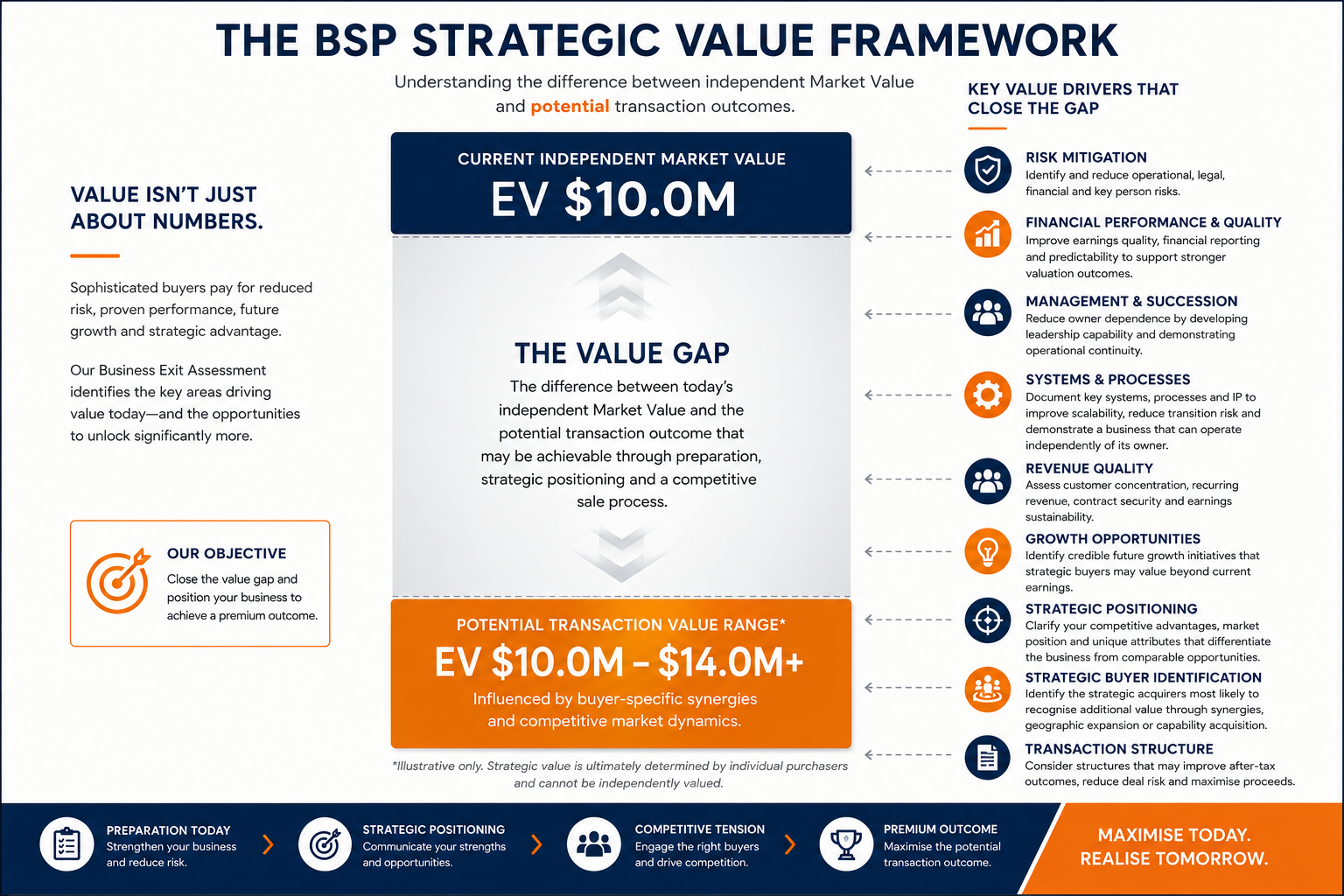
Developed from BSP Strategic’s experience advising Australian SME owners through valuations, strategic buyer identification and business sale transactions.
The Nine Drivers of Premium Transaction Outcomes
The BSP Strategic Value Framework identifies and strengthens factors that influence how buyers value your business and compete to acquire it. Every Business Exit Assessment examines the commercial factors most likely to influence buyer interest, negotiation strength and ultimately transaction value.
1. Build A Stronger Business
Core Objective
Strengthen the foundations of your business to reduce risk and increase buyer confidence, support continued growth and prepare for the next phase of the business journey.
Risk Mitigation
Identify and reduce operational, legal, financial and key person risks that may reduce buyer confidence or transaction value.Reducing Uncertainty Builds Value
Sophisticated buyers pay more when they perceive lower risk. By identifying and addressing operational, legal, financial and key person risks before going to market, business owners can strengthen buyer confidence, improve negotiation leverage and reduce surprises during due diligence.
Financial Performance & Quality
Improve earnings quality, reporting and financial predictability to support stronger valuation outcomes.Quality Earnings Attract Better Buyers
Buyers assess more than reported profit. Reliable financial reporting, sustainable earnings and predictable performance increase confidence in future cash flows, helping support stronger negotiations and improving the credibility of the business throughout the sale process.
Systems & Processes
Document key systems, processes and intellectual property to improve scalability and ensure a smooth transition.Businesses Shouldn't Depend On Their Owner
Well-documented systems demonstrate that a business can operate consistently beyond its current owner. Strong operational processes reduce transition risk, improve scalability and make it easier for buyers to integrate and grow the business after acquisition.
2. Build A More Valuable Acquisition
Core Objective
Help buyers see the strategic value and future potential your business can deliver
Management & Succession
Reduce owner dependence by developing leadership capability and operational continuity.Strong Teams Create Stronger Businesses
Firms with capable management teams are often more attractive to buyers because future performance is less dependent on the owner. Demonstrating leadership depth and succession planning capability can significantly improve buyer confidence and transaction appeal.
Revenue Quality
Assess customer concentration, recurring revenue, contract security and earnings sustainability.Not All Revenue Is Valued Equally
Sophisticated buyers assess the quality and durability of revenue, not simply its size. Diversified customers, recurring income and sustainable earnings generally reduce perceived risk and create a stronger platform for premium transaction outcomes across a broad range of market conditions.
Growth Opportunities
Identify credible future initiatives that strategic buyers may value beyond current earnings.Future Potential Creates Strategic Value
Strategic buyers frequently pay for future opportunities as well as current performance. Clearly demonstrating realistic pathways for expansion, new markets, or operational improvements can strengthen buyer interest and support premium transaction outcomes. It can also show how the business may move forward under new ownership.
3. Maximise Competitive Tension
Core Objective
Create the right market conditions to attract premium offers and maximise value
Strategic Positioning
Clarify your competitive advantages, market position and unique attributes that differentiate your business legacy.Different Businesses Command Different Premiums
Businesses that clearly demonstrate competitive advantages are easier for buyers to justify acquiring. Understanding and communicating your strategic strengths helps position the business beyond price alone and supports stronger buyer engagement.
Strategic Buyer Identification
Identify the buyers most likely to recognise additional value through strategic synergies.The Right Buyer Makes All The Difference
Different buyers value the same business differently. Identifying strategic acquirers whose objectives align with your business increases the likelihood of competitive interest and improves the potential for premium transaction outcomes.
Transaction Structure
Consider transaction structures that may improve after-tax outcomes while reducing deal risk.Value Isn't Just About The Purchase Price
Commercial terms, tax outcomes and transaction structure can significantly influence the value ultimately retained by shareholders. Considering these factors early helps support smoother negotiations and better overall transaction outcomes.
Who is a Business Exit Assessment Designed For?
Whether you’re planning to sell next year or in five years’ time, a Business Exit Assessment helps you understand where value can be created, risks reduced and strategic opportunities identified before entering the market. The Business Exit Assessment provides valuation clarity which in turn assists in guiding your exit strategy, personal priorities and long-term “post-business” goals.
What Does A Business Exit Assessment Include?
Every Business Exit Assessment is tailored to the specific characteristics of your business, industry and likely buyer profile. Using the BSP Strategic Value Framework, our trusted advisors examine the commercial, operational and strategic factors most likely to influence buyer interest, transaction readiness and potential transaction outcomes.
Rather than simply determining what your business is worth today, the assessment provides practical insights into where strategic opportunities may exist and the actions most likely to strengthen your position before entering the market. This allows owners to make informed decisions about their next steps.
A typical Business Exit Assessment includes the following components:
- Independent Market Value
- Strategic Opportunity Assessment
- Buyer Universe Analysis
- Industry Landscape
- Financial Quality Review
- Risk Assessment
- Strategic Positioning Review
- Growth Opportunity Assessment
- Revenue Quality Analysis
- Management & Succession Review
- Transaction Structure Considerations
- Prioritised Action Plan
Together, these components form a comprehensive plan to improve sale readiness and prepare for the owner’s next chapter.
Real Strategic Outcomes


Frequently Asked Questions
Know Where You Stand Before Going To Market
The best transaction outcomes are rarely achieved by chance.
They come from preparation, strategic positioning, and engaging the right buyers.
A Business Exit Assessment provides an independent view of your current position together with a practical roadmap for maximising future transaction outcomes.