
Strategic Sale of A1 Fire & Safety to National Fire Protection Group
Valuation-Led Preparation, Strategic Buyer Competition and Negotiation Delivering an Exceptional Shareholder Outcome
| Transaction Overview | |
|---|---|
| Industry | Fire Protection & Essential Services |
| Location | Toowoomba, Queensland |
| Annual Revenue | Less than $10m |
| EBITDA Margin | ~25% |
| Recurring Revenue % | 85%+ |
| Assets Serviced | ~30,000 |
| Clients | ~1,800 |
| Buyer | Undisclosed National Fire Protection Group |
| Transaction Type | Strategic Share Sale |
| Consideration Structure | Upfront cash and performance-based deferred consideration |
| BSP’s Role | Independent equity valuation, vendor due diligence, strategic buyer engagement and transaction negotiation |
| Key Outcomes | Improved transaction consideration and accelerated post completion settlement of contingent consideration |

Business Overview
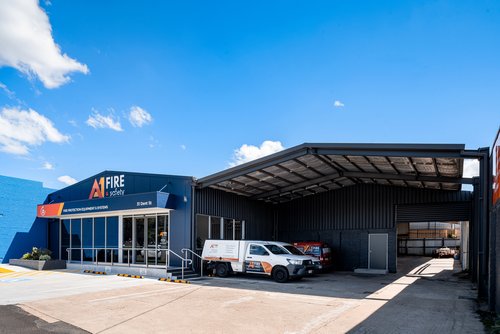
A1 Fire & Safety was an established fire protection and safety services business headquartered in Toowoomba, Queensland, servicing commercial, industrial and government customers across the Darling Downs, South West Queensland and surrounding markets.
With annual revenues of less than $10 million, the business had developed an extensive portfolio of approximately 30,000 fire protection assets across 1,800 clients, supported by an established regional technical workforce, strong customer relationships and a highly recurring revenue model.
Inspection, testing and maintenance (ITM) services, together with complementary fire safety diagrams and safety training, contributed more than 85% of annual revenues.
Importantly, A1 adopted a relatively capital-light operating model, outsourcing non-recurring installation projects to third-party providers while concentrating its internal resources on recurring compliance and safety services.
This differentiated operating model generated strong profitability while limiting direct exposure to the project delivery risks and earnings volatility often associated with installation and construction activities.
From a strategic acquisition perspective, the combination of recurring compliance-driven demand, extensive serviced asset coverage, customer diversification and an established regional workforce provided an attractive investment proposition.
Initial Engagement
BSP Strategic’s involvement commenced with an independent valuation of A1’s equity, providing shareholders with an objective assessment of the business’s underlying value and a foundation for evaluating their potential exit options.
The valuation considered historical and maintainable earnings alongside the business’s commercial and operational characteristics, including recurring revenue quality, customer relationships, workforce capabilities, competitive positioning and industry-specific risks.
This initial engagement provided an important foundation for understanding both the business’s independent market value and the potential sources of additional value available to strategically motivated acquirers.
Sale Preparation & Vendor Due Diligence
Following the initial valuation, BSP undertook preliminary sale preparation and vendor due diligence activities to validate the underlying earnings profile, assess the sustainability of recurring revenues and identify potential transaction risks.
Particular emphasis was placed on understanding the extensive portfolio of assets serviced, the characteristics of recurring ITM revenues, customer concentration, workforce capabilities and operational dependencies.
The assessment also considered earnings normalisations and matters likely to attract scrutiny during a formal buyer due diligence process.
Importantly, BSP recognised the strategic appeal of A1’s service-focused operating model, which differed from fire protection businesses carrying greater exposure to non-recurring installation and construction revenues.
This preparation supported the development of a compelling strategic investment case before commencing the formal sale process.

Comprehensive Strategic Buyer Engagement
BSP was subsequently engaged to undertake a comprehensive strategic business sale campaign.
The process involved identifying, mapping and approaching a broad universe of prospective strategic acquirers, including established industry operators seeking to expand their geographic footprint, technical capabilities and recurring service portfolios.
A1’s highly recurring revenue model, extensive asset servicing portfolio, diversified customer relationships and established regional workforce formed central elements of the strategic investment case.
Following a competitive engagement process, a national fire protection group emerged as the preferred acquirer.
BSP negotiated preliminary commercial terms involving a combination of upfront cash consideration and performance-based deferred consideration.
Renegotiating Transaction Value Drivers During Due Diligence
During the transaction process, A1’s last-twelve-month (LTM) earnings continued to improve, creating an opportunity to reassess the financial assumptions underpinning the original negotiated consideration.
Rather than progressing the transaction on an increasingly outdated earnings basis, BSP revisited the valuation analysis and reopened commercial negotiations.
This resulted in a material uplift in the negotiated transaction consideration, supported by the improvement in underlying earnings performance.
Importantly, the revised terms increased the upfront consideration while retaining a contingent performance-related component.
This outcome demonstrated the importance of continually monitoring financial performance throughout a business sale process and maintaining an active negotiating position during due diligence.
Transaction Structuring & Completion
The transaction progressed through comprehensive financial, commercial and legal due diligence, culminating in the negotiation of a detailed Share Sale Agreement incorporating upfront consideration, performance-based deferred consideration and mechanisms governing completion adjustments.
The business’s significant growth in revenues and earnings during the transaction process introduced additional complexity, particularly in establishing an appropriate level of normalised working capital and determining the financial arrangements between the parties at completion.
Establishing an Appropriate Working Capital Peg
Given A1’s recent growth, BSP undertook substantial analysis of historical and current net working capital requirements to establish an appropriate working capital target, commonly referred to as the working capital peg.
Rather than relying on a conventional long-term historical average that may not have adequately reflected the business’s changing scale, a shorter-term average net working capital position was adopted to better represent its contemporary operating requirements.
This analysis considered movements in trade receivables, trade payables, accrued liabilities and other relevant working capital components, alongside the business’s recent trading performance.
The negotiated working capital mechanism provided a framework for assessing the level of working capital delivered with the business and determining any resulting adjustments to transaction consideration.
Managing Separate Financial and Legal Completion Dates
Commercial considerations subsequently required the legal completion of the transaction to be deferred, creating a further layer of complexity in the completion arrangements.
The parties adopted a locked-box-style structure involving a financial effective date and a subsequent legal completion date, separated by approximately twelve days.
This distinction required careful consideration of how the financial position of the business would be determined at the effective date, while legal ownership and control transferred at the later completion date.
BSP worked through the financial implications of this arrangement, including the preparation of completion accounts, relevant cut-off procedures, the treatment of intervening transactions and the reconciliation of amounts ultimately payable between the parties.
The arrangements also required careful consideration of permitted transactions during the intervening period and the treatment of financial movements between the two dates.
Shareholder Distributions and Excluded Assets
Further complexity arose in determining the appropriate treatment and timing of pre-completion shareholder dividends and the transfer of certain privately used motor vehicles and other agreed excluded assets.
These matters required coordination between the financial completion workings, transaction documentation and the parties’ legal and accounting advisers.
Particular attention was given to ensuring that shareholder distributions and excluded asset transfers were appropriately documented and reflected in the completion calculations, without creating unintended adjustments or inconsistencies with the negotiated Share Sale Agreement.
Completion Accounts, True-Up & Final Adjustments
Following completion, BSP Strategic remained actively involved in reviewing the completion accounts prepared by the company’s accountants, with particular emphasis on determining the final purchase price adjustments arising under the Share Sale Agreement.
Given the transaction’s complexity, including the significant recent growth in working capital requirements and the separation between the financial effective date and legal completion date, the process required detailed consideration of the accounting balances and their treatment under the agreed completion mechanisms.
BSP assisted in reviewing and reconciling the completion accounts, undertaking further investigations and obtaining confirmations regarding the accounting treatment of specific assets, liabilities, accruals and other relevant balances.
Particular attention was given to ensuring consistency between the accounting records, the agreed working capital and net debt definitions, and the financial adjustment mechanisms prescribed by the Share Sale Agreement.
This work supported the determination of the final purchase price true-up, including the reconciliation of estimated completion adjustments against the amounts ultimately determined from the completion accounts.
BSP’s involvement helped ensure that the final adjustments were appropriately substantiated and that the financial consequences of the transaction were accurately reflected in the consideration payable to shareholders.
The process highlighted the importance of maintaining experienced financial and transaction advisory representation beyond legal completion, particularly where complex accounting treatments and negotiated working capital arrangements can materially influence the proceeds ultimately realised by vendors.
Protecting Shareholder Value Through Completion
Collectively, the working capital analysis, negotiated completion mechanisms, separate financial and legal completion dates, shareholder distributions, excluded asset arrangements and subsequent purchase price true-up required substantial financial analysis, accounting investigations and transaction coordination.
Working alongside the company’s accountants and legal advisers, BSP remained involved throughout the financial completion process, assisting in resolving accounting treatment matters and reviewing the adjustments required under the Share Sale Agreement.
This involvement demonstrated that successful transaction execution extends beyond negotiating enterprise value and signing a binding agreement. It requires careful management of the financial mechanisms that ultimately determine the consideration received by shareholders.
Post-Completion – Negotiating an Accelerated Earn-Out Settlement
BSP Strategic’s involvement continued beyond settlement and the subsequent completion accounts reconciliation.
Under the negotiated Share Sale Agreement, a portion of the transaction consideration remained contingent upon A1 achieving agreed future earnings performance targets. While this structure provided shareholders with the opportunity to realise additional consideration, it also exposed them to ongoing performance risk and uncertainty over the timing and ultimate receipt of those proceeds.
Approximately three months following settlement, the acquirer approached BSP regarding the potential early resolution of the outstanding earn-out arrangements.
Recognising the opportunity to improve the certainty and timing of shareholder returns, BSP undertook further commercial negotiations to establish an acceptable early settlement of the contingent consideration.
Rather than waiting for the original performance assessment period to conclude, BSP negotiated an agreed cash payment in exchange for the early settlement of the remaining earn-out opportunity.
The resulting arrangement enabled shareholders to bring forward a significant component of their potential future proceeds, while removing the uncertainty associated with the original earnings performance conditions.
Importantly, this outcome represented a further commercial negotiation undertaken after completion of the business sale, demonstrating the value of maintaining experienced transaction advisory representation throughout the full ownership transition.
The engagement reinforced an important principle of strategic business sales: the value ultimately realised by shareholders depends not only on the headline transaction consideration, but also on how that consideration is structured, the risks attached to future payments and the timing and certainty of cash proceeds.
Strategic Acquisition Rationale
The strategic sale of A1 Fire & Safety demonstrated the attractiveness of established regional fire protection businesses to larger industry operators pursuing geographic expansion, recurring revenue growth and operational synergies.
A1’s operating model offered several characteristics that differentiated it from more project-dependent fire protection businesses and supported its appeal to prospective strategic acquirers.
Recurring, Compliance-Driven Revenues
More than 85% of A1’s annual revenues were generated from inspection, testing and maintenance (ITM) activities together with complementary fire safety diagrams and safety training.
This concentration of recurring and repeat compliance-related services provided a relatively predictable revenue base, supported by ongoing statutory fire safety obligations and established customer relationships.
For strategic acquirers, these characteristics offered opportunities to strengthen earnings visibility, improve revenue resilience and expand existing service portfolios.
Extensive Serviced Asset Portfolio
A1 maintained an extensive service portfolio comprising approximately 30,000 fire protection assets across a broad range of customer locations.
This established asset servicing base represented a significant source of ongoing inspection, testing and maintenance activity, together with opportunities to provide additional compliance and safety-related services. The broad asset base also represents substantial opportunity to capitalise on more irregular system upgrades or 5 or ten yearly replacements.
The scale and geographic distribution of this portfolio would be extremely difficult for a new market entrant to replicate organically within a short period.
Diversified Customer Base
With approximately 1,800 clients across commercial, industrial and regional markets, A1 benefited from an established and diversified customer portfolio.
This reduced reliance on individual customer relationships while providing opportunities for an acquirer to expand service penetration and introduce complementary offerings across the existing client base.
The breadth of customer relationships also supported the business’s strategic positioning within regional Queensland.
Limited Exposure to Installation and Construction Risk
Unlike fire protection businesses heavily reliant on new installations or construction projects, A1 largely outsourced non-recurring installation works to third-party providers.
This enabled the business to concentrate its internal workforce and resources on ongoing maintenance, compliance and safety services.
From an acquisition perspective, this operating model reduced direct exposure to project delivery risks, construction cycles and the earnings volatility commonly associated with non-recurring project revenues.
Established Regional Workforce and Geographic Presence
A1’s experienced technical workforce, established operating systems and strong presence across the Darling Downs, South West Queensland and surrounding markets provided an attractive regional platform.
For larger fire protection groups seeking geographic expansion, acquiring an established regional operator can provide immediate access to skilled personnel, existing customers, operational infrastructure and local market knowledge.
These capabilities may be particularly valuable in regional markets where recruiting suitably qualified technicians and establishing operational coverage organically can be challenging.
Opportunities for Strategic Synergies
Beyond A1’s standalone financial performance, the acquisition offered potential opportunities for a larger operator to realise strategic synergies through expanded geographic coverage, complementary service offerings, customer cross-selling and operational efficiencies.
An established portfolio of recurring maintenance activities, combined with regional workforce capabilities and customer relationships, provided a platform for further growth within a larger corporate group.
Collectively, these characteristics demonstrated how a business’s strategic value to an acquirer can extend beyond its historical earnings, reinforcing the importance of identifying buyers with the greatest capacity to realise value from an acquisition.
The Outcome – Creating Value Throughout the Transaction Lifecycle
The successful strategic sale of A1 Fire & Safety demonstrated BSP Strategic’s comprehensive, valuation-led approach to business sales, extending from initial valuation and sale preparation through to transaction completion and post-settlement negotiations.
BSP’s involvement delivered value across five key areas:
- Valuation & Sale Preparation: Independent equity valuation and vendor due diligence to substantiate recurring revenues, assess earnings quality and strengthen the strategic investment case.
- Strategic Buyer Engagement: A comprehensive campaign targeting strategic acquirers, creating competitive tension and identifying buyers capable of recognising A1’s strategic value.
- Transaction Renegotiation: A material uplift in negotiated consideration following BSP’s reassessment of improved earnings performance during due diligence.
- Transaction Structuring & Completion: Detailed working capital analysis, complex completion arrangements and assistance with completion accounts and purchase price adjustments to protect shareholder value.
- Post-Completion Negotiations: Successful negotiation of an accelerated earn-out settlement, improving the timing and certainty of shareholder proceeds.
The transaction highlights BSP’s ability to create and protect shareholder value throughout the entire sale process — demonstrating that a successful outcome depends not only on the headline enterprise value, but also on transaction structure, risk allocation and the ultimate realisation of proceeds.
The BSP Strategic Difference
The A1 Fire & Safety transaction demonstrates how independent valuation expertise, industry-specific knowledge and disciplined transaction execution can deliver outcomes beyond those achieved through a conventional business sale process.
From identifying strategic buyers and negotiating improved commercial terms to managing complex completion arrangements and accelerating contingent consideration, BSP Strategic remained focused on maximising and protecting shareholder value.
Our approach is built around preparing businesses for acquisition, identifying buyers who recognise strategic value and negotiating outcomes that maximise the proceeds ultimately realised by business owners.
Considering the Sale of Your Business?
Whether you’re preparing for an exit, seeking an independent valuation or exploring strategic acquisition opportunities, BSP Strategic can help you understand your business’s value and develop a strategy to maximise your outcome.