

What Is A Strategic Premium?
A strategic premium is the additional value a particular buyer may be prepared to pay above the value of a business on a standalone basis because the acquisition creates benefits that are specific to that buyer.
These benefits may include cost synergies, access to established customers or new markets, complementary products and services, intellectual property, specialist capabilities, increased market share or the ability to accelerate growth.
For example, an independent business valuation may assess a business with maintainable EBITDA of $1 million using a 4.0× multiple, indicating a standalone enterprise value of $4 million.
A strategic buyer, however, may identify an additional $500,000 of annual benefits through operating efficiencies, cross-selling opportunities or other synergies. If those benefits are sustainable, they may provide that buyer with an economic rationale to consider a value above the business’s standalone market value.
Importantly, the existence of strategic benefits does not mean that all of that additional value will be reflected in the purchase price. The value ultimately realised depends on the significance of those benefits to each buyer, their ability to realise them, the competitive dynamics of the sale process and the strength of the vendor’s negotiating position.
This is a central principle of BSP Strategic’s strategic business sales approach: identify the buyers with the strongest strategic rationale, clearly articulate the acquisition opportunity and create competitive tension that provides the best opportunity for the vendor to capture a share of that strategic value.
Why Most Businesses Sell Below Their Potential Value
A strategic premium is the additional value a particular buyer may be prepared to pay above the value of a business on a standalone basis because the acquisition creates benefits that are specific to that buyer.
These benefits may include cost synergies, access to established customers or new markets, complementary products and services, intellectual property, specialist capabilities, increased market share or the ability to accelerate growth.
For example, an independent business valuation may assess a business with maintainable EBITDA of $1 million using a 4.0× multiple, indicating a standalone enterprise value of $4 million.
A strategic buyer, however, may identify an additional $500,000 of annual benefits through operating efficiencies, cross-selling opportunities or other synergies. If those benefits are sustainable, they may provide that buyer with an economic rationale to consider a value above the business’s standalone market value.
Importantly, the existence of strategic benefits does not mean that all of that additional value will be reflected in the purchase price. The value ultimately realised depends on the significance of those benefits to each buyer, their ability to realise them, the competitive dynamics of the sale process and the strength of the vendor’s negotiating position.
This is a central principle of BSP Strategic’s strategic business sales approach: identify the buyers with the strongest strategic rationale, clearly articulate the acquisition opportunity and create competitive tension that provides the best opportunity for the vendor to capture a share of that strategic value.

Value Is Created Before The Business Goes to Market
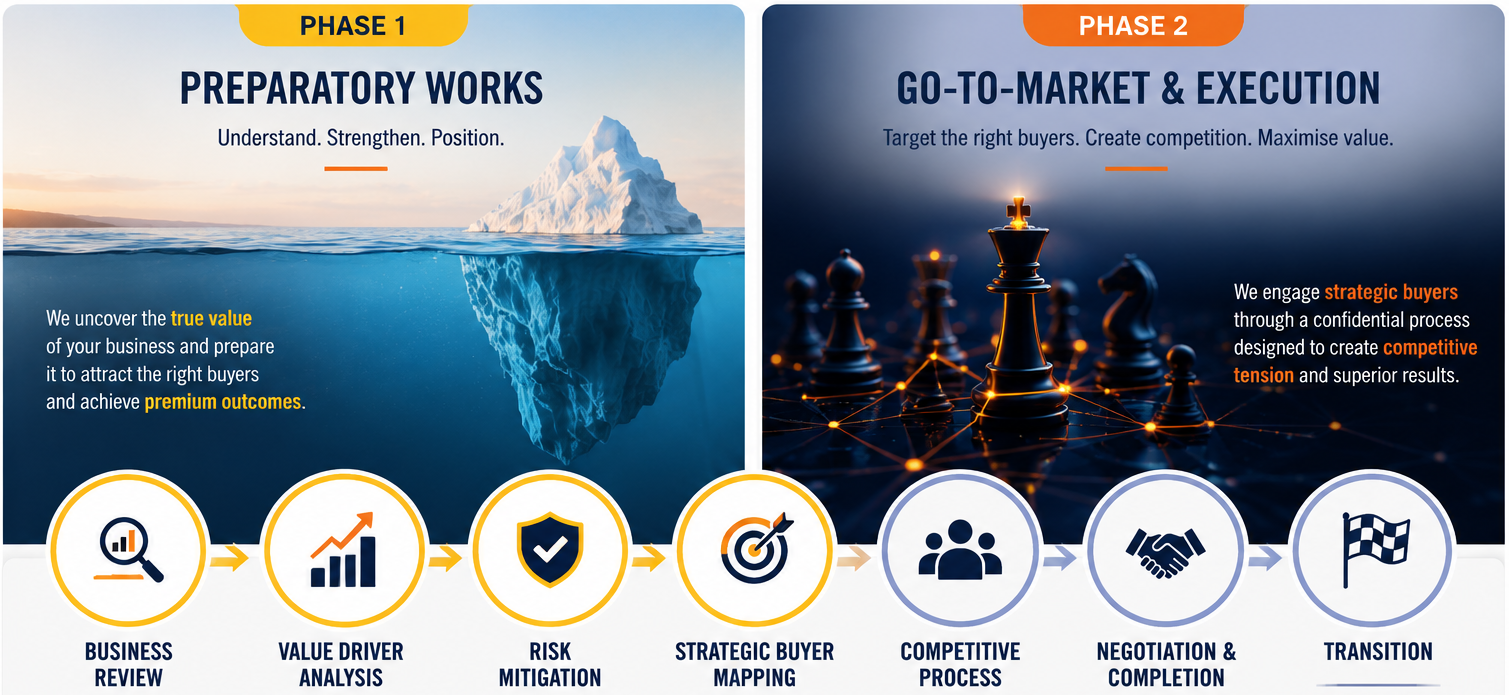
Business Review
Understand the business through an acquirer’s eyes and prepare for due diligence in advance.
Value Driver Analysis
Identifying the characteristics that create strategic value beyond financial performance.
Risk Mitigation
Removing issues that reduce buyer confidence and negotiating leverage.
Strategic Buyer Mapping (Buyers Universe)
Researching the buyers capable of recognising strategic value. Using market research, industry trends and various other data sets as appropriate.
Competitive Process
Running a confidential process designed to maximise competitive tension – without advertising.
Negotiation & Completion
Structuring commercial outcomes—not simply agreeing on price. We work closely with tax and legal advisory teams to ensure aligned outcomes that maximise net sale proceeds after tax.
Transition
Often BSP’s role extends beyond closing the deal with calculatiop of working capital “true-ups”, earn-out payments, release of retentions, etc. We commit to the full journey.
Why Preparation Matters
Not every business attracts strategic buyers, and not every strategic buyer recognises the same opportunities.
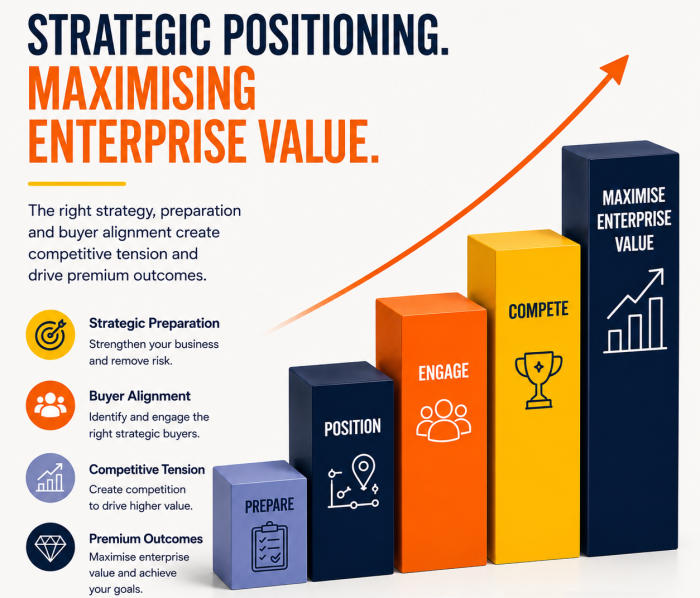
Maximising enterprise value requires identifying the characteristics that make your business strategically attractive, addressing risks before entering the market, and positioning those opportunities to the right buyers. An effective sales strategy connects the business’s key benefits with its target audience’s priorities.
At BSP Strategic, our process begins well before a business is offered for sale. Through independent business valuation, strategic buyer mapping, and comprehensive sale preparation, we identify and communicate the unique sources of strategic value that may justify premium pricing.
Our objective is not simply to find a buyer.
It is to identify buyers who can recognise the full strategic value of your business and create a competitive process that maximises sales goals.
Not All Buyers Value A Business The Same
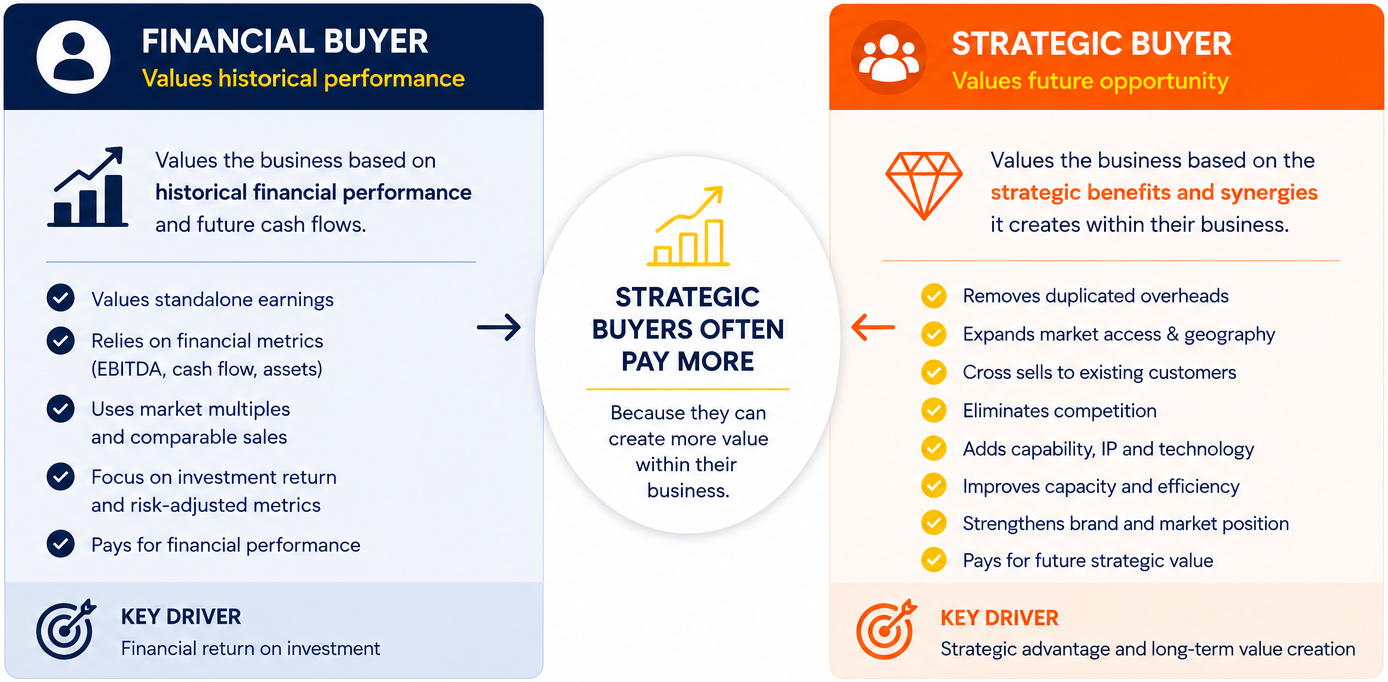
Different buyers often look at the same business through different lenses. Strategic Buyers recognise and pay for the unique value your business creates.
How BSP Differs From Traditional Business Brokers
| Traditional Broker | BSP Strategic |
|---|---|
| Advertises businesses | Positions businesses strategically |
| Large buyer database | Strategic buyer research |
| Price based on comparable sales | Value based on strategic opportunity |
| Waits for enquiries | Direct confidential buyer engagement |
| Focus on transaction | Focus on maximising enterprise value |
| Negotiates price | Negotiates commercial outcomes |
Why Strategic Buyers Pay More
The highest offers rarely come from buyers simply looking for a good investment.
Instead, premium outcomes often come when a business has strategic value beyond its standalone financial performance. Strategic acquirers evaluate an acquisition differently from financial investors because they consider not only the profits the business generates, but also the value it can create within their existing organisation. This value-based selling approach connects the opportunity to the commercial gains available to each buyer.
This distinction is important.
While financial buyers typically determine value based on future maintainable earnings and investment returns, strategic buyers may be willing to pay a premium where an acquisition accelerates their long-term objectives, removes competitive threats or unlocks opportunities that would otherwise take years to achieve organically.
| Financial Buyer | Strategic Buyer |
|---|---|
| Values standalone earnings | Values earnings plus strategic synergies |
| Investment return focused | Long-term strategic objectives |
| Limited synergies | Multiple sources of additional value |
| Usually constrained by ROI | Often able to justify premium pricing |
| Competes on financial metrics | Competes on strategic opportunity |

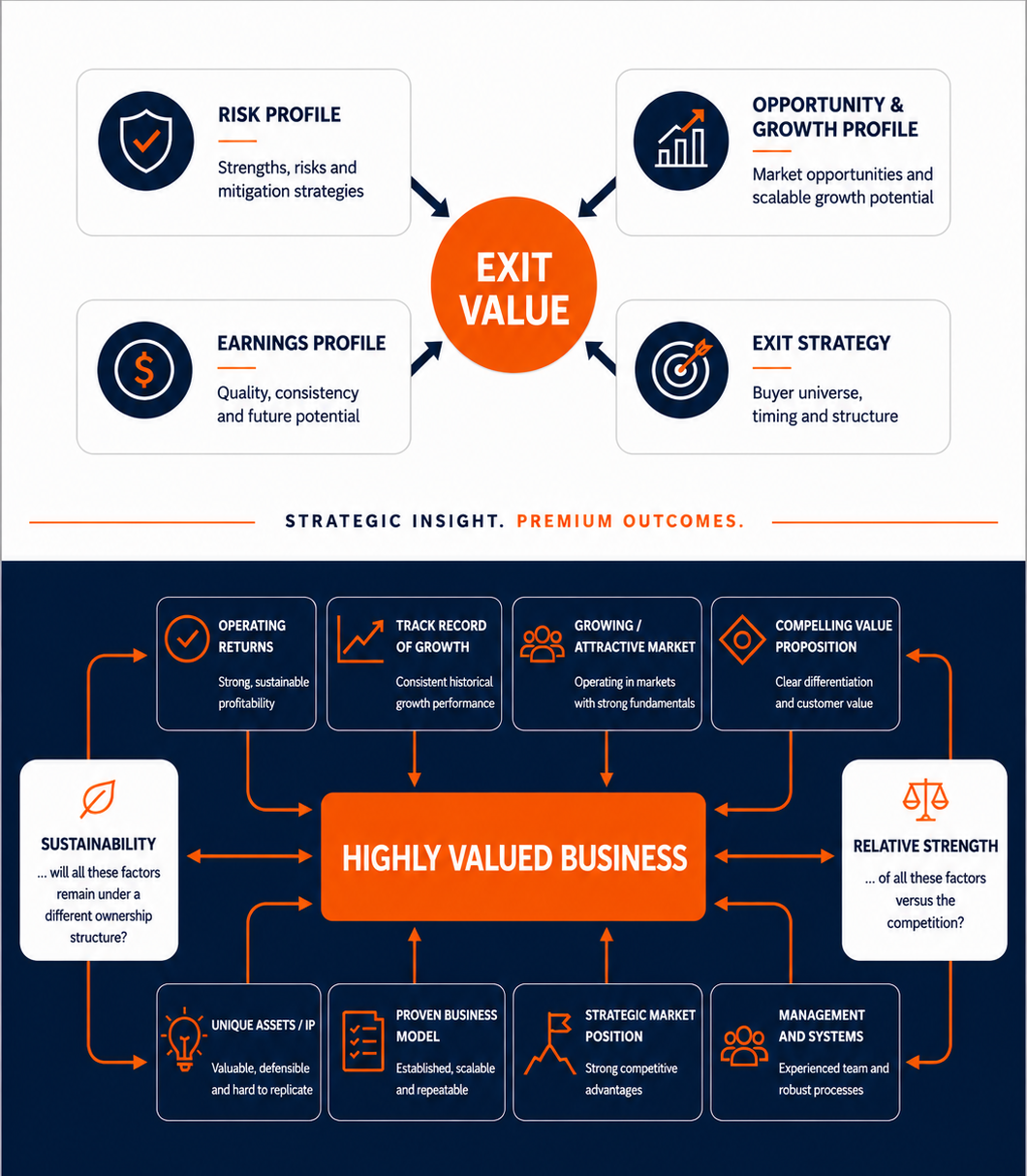
The Drivers Of Enterprise & Equity Value
Sophisticated buyers regularly pay premiums when strong evidence shows the business has desirable commercial characteristics. Substantial value is also created (or lost) through the deal structuring and execution process – hence it has been included below.
Financial Performance
- Higher % of recurring vs non-recurring revenue streams,
- Industry-leading gross margins (implies a defensible market position),
- Consistent or growing earnings (a track record of growth),
- Operating leverage,
- A proven business model,
- Reliability of forecast performance,
- Attractive cash flow conversion rates.
- Evidence that financial performance can meet future revenue targets
Risk Profile
- Limited customer concentration,
- High rates of customer retention,
- Reduced reliance on key personnel (management risk)
- Degree of dependence on owners,
- Limited supplier risk,
- Well-documented systems and processes.
Strategic Position
- Market share and geographic footprint,
- A growing and attractive market,
- Sustainable competitive advantage and compelling value proposition
- Unique assets and/or protected proprietary intellectual property.
Growth Potential
- Scalability (including capital requirements),
- Acquisition opportunities,
- New markets.
- Opportunities to increase sales targets through complementary products or services
Deal Structure
- Asset vs share sale (including earn-outs),
- Tax optimisation (including application of CGT concessions),
- Working capital requirements,
- Franking credits / retained earnings / debit loans / pre-completion dividends.
Preparing Businesses for Strategic Buyers
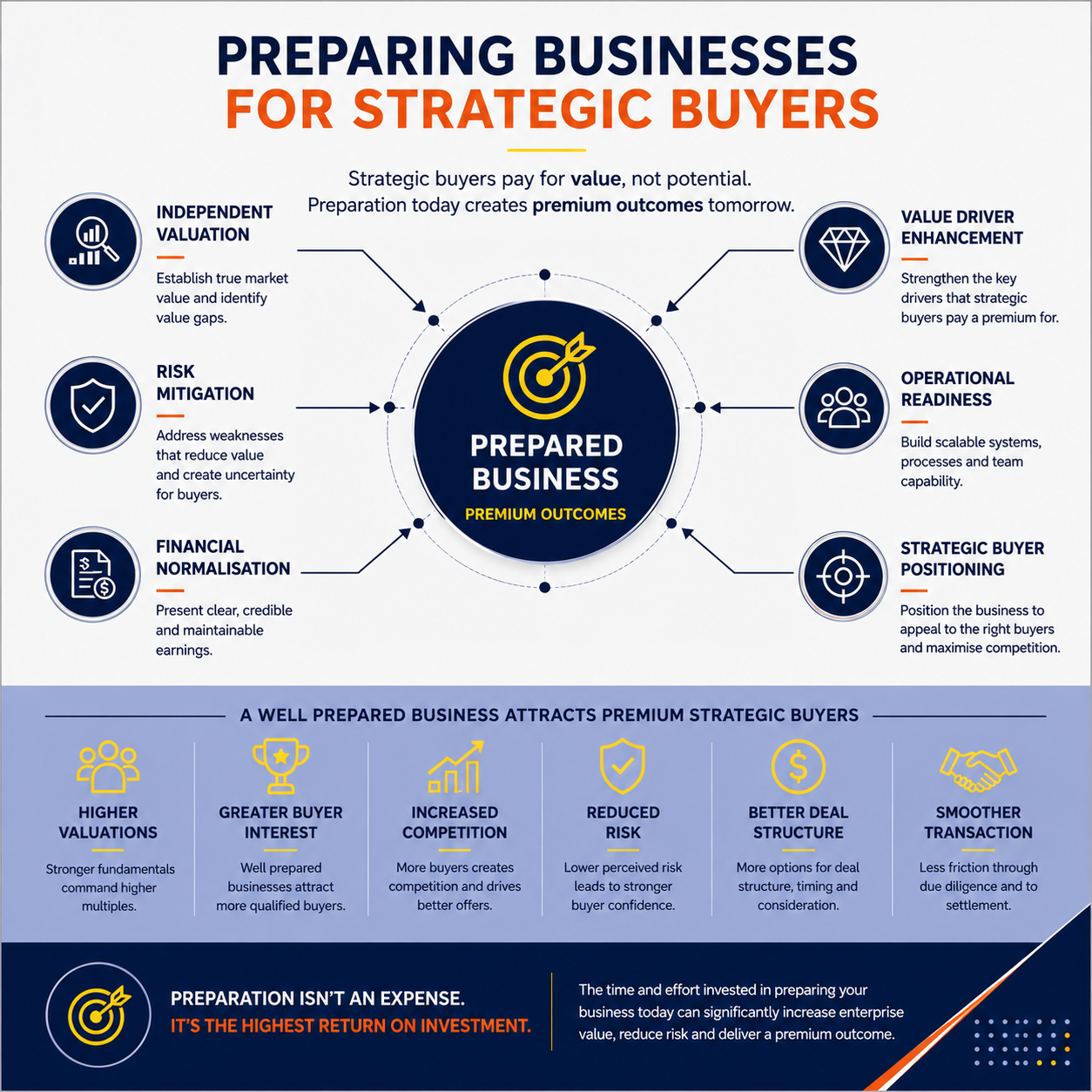
Preparation is at the cornerstone of the value maximisation process, adding substantial value and mitigating risks long before the first potential strategic buyer reviews the opportunity. At a high level, we prepare businesses for an optimised sale process by undertaking the following:
- Understand current market value and identify value gaps.
Risk Mitigation
- Remove issues buyers use to negotiate price reductions.
Financial Normalisation
- Present maintainable earnings clearly and credibly.
Strategic Positioning
- Highlight competitive advantages ordinary brokers overlook.
Buyer Mapping
- Identify buyers who can recognise strategic value.
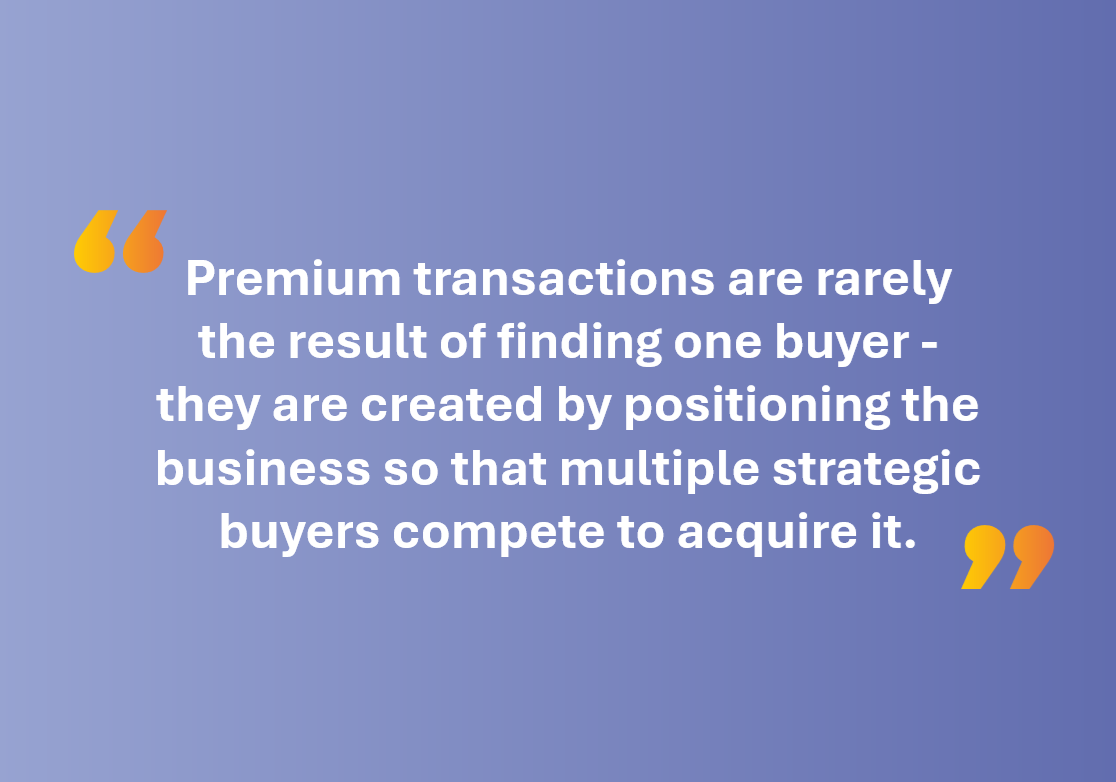
Creating Competitive Tension
Strategic buyers compete when they recognise unique value and understand that others are pursuing the same opportunity.
BSP designs structured sale campaigns that identify the most logical strategic acquirers, control the flow of information and manage buyer engagement to encourage competitive tension. The process creates a focused sales pipeline rather than relying on general advertising or passive enquiries.
This disciplined approach frequently results in stronger offers, improved commercial terms and greater certainty of completion.
The objective is not simply to find a buyer, but to create an environment where the right buyers recognise strategic value and compete accordingly. For each campaign, our go-to-market strategy aims to attract qualified interest while protecting confidentiality and negotiating leverage.
Real Life Case Studies
Read how BSP has added tens of millions in deal value across recent deals through preparation, strategic positioning, buyer mapping and competitive tension.


The Questions Every Business Owner Should Ask Before Selling